
Best Physiotherapy Routine After Total Knee Replacement
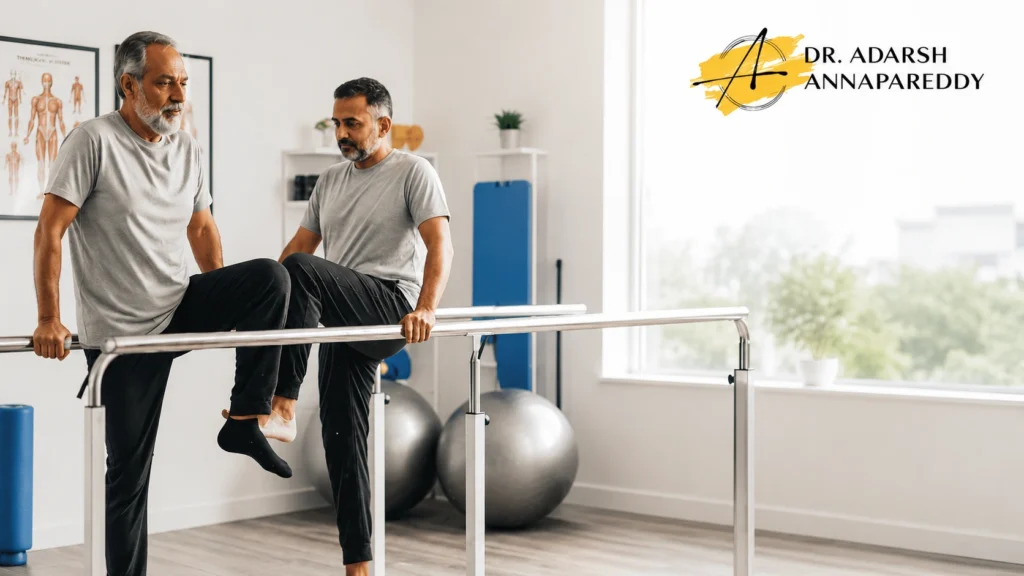
The journey of healing after a total knee replacement is much like tending to a delicate sapling, where each day’s care shapes its strength and resilience. In the context of the human body, this means beginning physical therapy after knee replacement under expert supervision, focusing first on gentle knee rehab exercises that encourage range of motion and controlled mobility, then gradually introducing targeted muscle strengthening activities that support the new joint without overloading it. In India, where recovery often intertwines with traditional wisdom, incorporating mild stretches, guided breathing, and even meditation alongside your rehab after knee surgerycan greatly assist in the healing process.
The structured plan typically begins within 24 hours of surgery, progresses over several weeks with measured intensity and includes post-op physical therapy steps such as ankle pumps, heel slides and straight leg raises- all while keeping an eye on swelling and ensuring regular physiotherapy sessions so that each milestone in your knee replacement recoverybecomes a stepping stone towards walking more freely and living more comfortably.
Indoor And Outdoor Activities After Physiotherapy Sessions-
Once your post-knee surgery care has established a steady base, life gently opens up to more activities, and in the Indian setting, this may mean strolling through your garden in the cool morning air or walking on the shaded verandah while chatting with family, both of which offer the benefit of low-impact movement without straining the joint.
As confidence builds, venturing outdoors for short walks in safe, even terrains can be an excellent way to improve knee function, while light household chores such as folding clothes or light cooking can maintain activity levels indoors without risking sudden twists or strain.
For those inclined towards a more scenic routine, parks with smooth walking paths, or even a few rounds of gentle chair yoga under guidance, can support walking after surgery and maintain steady circulation, all while keeping the recovery timeline on track, provided that each new activity is introduced with patience and within the comfort threshold of the healing knee.
Physiotherapy Mistakes To Avoid After Knee Replacement-
Avoid skipping the carefully prescribed physiotherapy sessions or overlooking the significance of swelling reduction strategies like applying ice packs and keeping the leg elevated. Just as concerning is the tendency to dismiss discomfort as a sign of progress rather than a cautionary signal from the body, with an equally harmful practice being the adoption of poor posture while walking or performing post-op physical therapy, which can subtly but surely place undue strain on the healing joint.
Conclusion-
Recovering from a knee replacement is not merely a matter of repairing what was once damaged, but a deliberate and almost artful process of building strength, confidence, and ease of movement in a joint that has been renewed.
Here physical therapy after knee replacement acts as the guiding compass, post knee surgery care becomes the steady anchor, and each careful step in rehab after knee surgery adds to your mosaic of restored independence, making knee surgery outcomes not just a medical success but a deeply personal victory – one achieved through patience, discipline, and the quiet but powerful belief that healing is not a race, but a journey of many small, well-timed steps.
Frequently Asked Questions
Physiotherapy usually starts within 24 hours after surgery, beginning with simple knee rehab exercises to promote range of motion and prevent stiffness. Early movement under supervision can accelerate knee replacement recovery while reducing complications. Your therapist will gradually increase activity intensity to ensure safe, steady progress without overloading the joint.
Yes, light activities like folding laundry or light cooking can be resumed after the first few weeks, provided they do not involve sudden twisting, bending, or lifting. Avoid activities that cause pain or swelling, and follow your post-knee surgery care plan to prevent strain while maintaining gentle mobility.
Safe options include straight leg raises, heel slides, gentle step-ups, and stationary cycling. These muscle-strengthening exercises improve stability and improve knee function without stressing the joint. Always follow your physiotherapist’s guidance to ensure movements are suitable for your stage in the recovery timeline.
Regular icing, elevating the leg, wearing compression stockings, and maintaining gentle movement can all help in swelling. Your physiotherapist may also recommend specific stretches or low-impact post-op physical therapy exercises to improve circulation and manage inflammation effectively.
Most patients can walk outdoors within 4-6 weeks, depending on their knee replacement recovery progress. Begin with short, flat, and safe paths, increasing distance gradually. Avoid uneven surfaces in the early stages to protect the joint and to maintain positive knee surgery outcomes.