
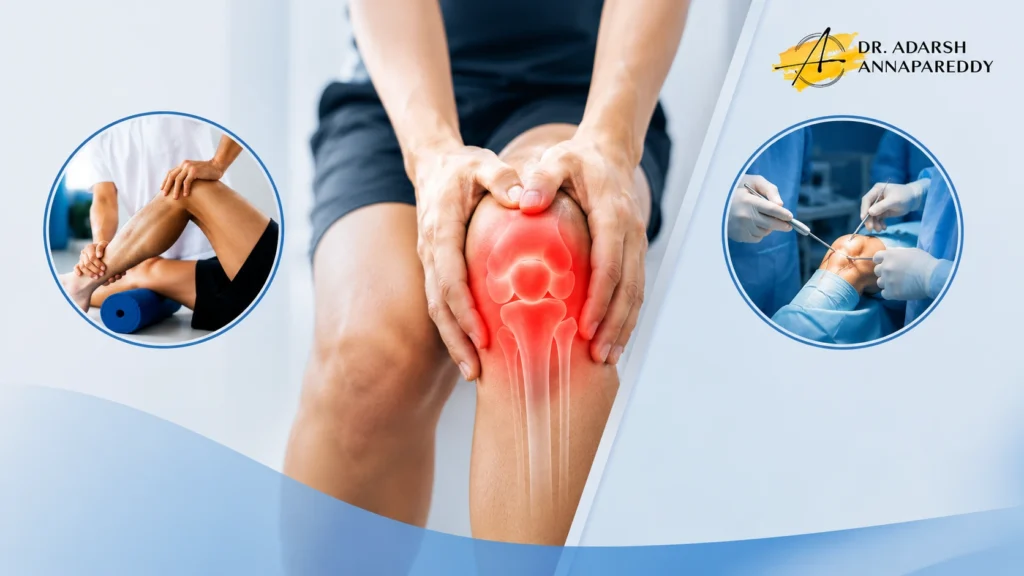
Forrecurringknee pain, physiotherapy istypicallythe first-line treatment because it strengthens the muscles around the knee, improves joint stability, reduces pain, and helps prevent future flare-ups. Common techniques include strengthening exercises, stretching, manual therapy, posture correction, and activity modification. Surgery is generally considered only when there is significant joint damage, ligament tears, severe arthritis, or when conservative treatments fail to provide relief.
Joint pains are normally dismissed as an unfortunate part and parcel of aging- and while there may be some grain of truth to this belief, there is no need for you to continue living in pain all the time, for years to come. In fact, once you decide to talk to an experienced orthopaedic doctor for non surgical treatment for chronic joint pain, you will realise there are plenty of options that do not entail major surgery at all.
Many issues with swelling, poor joint function and pain can be solved with physiotherapy and by employing a variety of pain management techniques. Let us hence try to answer this crucial question- “When is surgery necessary for joint pain?”, in this blog.
Physiotherapy vs. Surgery For Knee Pain- What Is A Better Option?
There is no absolute answer to this question- as it depends on many factors like your joint health, how well your body may respond to conventional treatments, if you can undergo a major surgery or have the time and resources needed post- surgery to rehabilitate the joint and so on.
Injuries to the joint- like ligament tears, cartilage wear and tear or degeneration of the joint due to chronic or autoimmune conditions can all contribute to symptoms which can be hard to deal with over time.
Physiotherapy is a set of well thought out exercises that are designed to help strengthen the muscles and connective tissue at the joint- though it cannot stop joint wear and tear, it can reduce the pain and other issues that can crop up. It also teaches you to stretch or use the joint in the right way- the technique is hence vital and is hence corrective in some measure.
Physiotherapy can also involve manual therapy, electrotherapy, posture correction and specific exercises. This way forward is suggested if the damage to the joint is localised, if it is recent, there is no major structural issue and that their condition has not worsened over time. In these cases, you could get a positive answer to this question- ‘Can physiotherapy avoid joint replacement surgery?’. But, remember, this is not the same for every person!
When Is Surgery Necessary For Joint Pain?
If the damage to your joint has worsened, is no longer limited to one area and more than one compartment is getting affected, if painkillers and physiotherapy no longer work for you and quality of life begins to spiral- then you may need to talk to your doctor about possible surgery- like getting an arthroscopy, joint replacement surgery or ligament reconstruction done, among other procedures.
Physiotherapy After Joint Surgery Recovery –
Physiotherapy before and after getting joint surgery is crucial to help rehabilitate your joint and build good joint function over time. Your progress or how you recover is very personal and will be unique to you. Following the instructions of an experienced physiotherapist before surgery ensures that you can begin to move quicker and your body recovers sooner AFTER surgery.
Conclusion–
The question of physiotherapy or surgery being a better option is hence not the RIGHT one- as both are different options used to treat arthritis, depending on the severity of your symptoms. Doctors normally recommend physiotherapy in the first three stages of arthritis. Surgery is considered only when your symptoms don’t get better with any other treatments and your quality of life begins to suffer severely. You will still need to opt for physiotherapy after surgery, as these carefully designed exercises are the ones which will help your joint regain its function over time.
Frequently Asked Questions
Yes, physiotherapy can reduce joint pain and improve movement in many conditions, including arthritis, tendon injuries, ligament strains, and overuse injuries. Treatment focuses on strengthening muscles, improving joint stability, restoring mobility, and reducing stress on affected joints. Many patients achieve significant symptom relief without requiring surgery.
Physiotherapy does not regenerate damaged cartilage or reverse structural joint damage. It improves joint function by strengthening supporting muscles, enhancing flexibility, correcting movement patterns, and reducing pain. These improvements can help patients remain active and delay or avoid surgical intervention in many cases.
The choice depends on the cause and severity of the joint problem. Physiotherapy is often the first line of treatment for pain, stiffness, and reduced mobility. Surgery is considered when significant structural damage, severe instability, advanced arthritis, or persistent symptoms continue despite appropriate non-surgical treatment.
No. Severe joint pain can often be managed with physiotherapy, medication, activity modification, weight management, and joint injections. Surgery is considered when these treatments fail to provide adequate relief or when joint damage significantly affects mobility, function, and quality of life.
Yes, physiotherapy can help reduce joint inflammation by improving circulation, restoring joint movement, reducing stiffness, and strengthening surrounding muscles. Exercise programmes and manual therapy techniques can decrease stress on the affected joint and support better long-term joint function.
Exercise cannot repair damaged cartilage or reverse advanced joint degeneration. However, it strengthens the muscles around the joint, improves flexibility, enhances stability, and reduces pain. Regular, structured exercise is an important part of managing joint conditions and maintaining long-term mobility.