
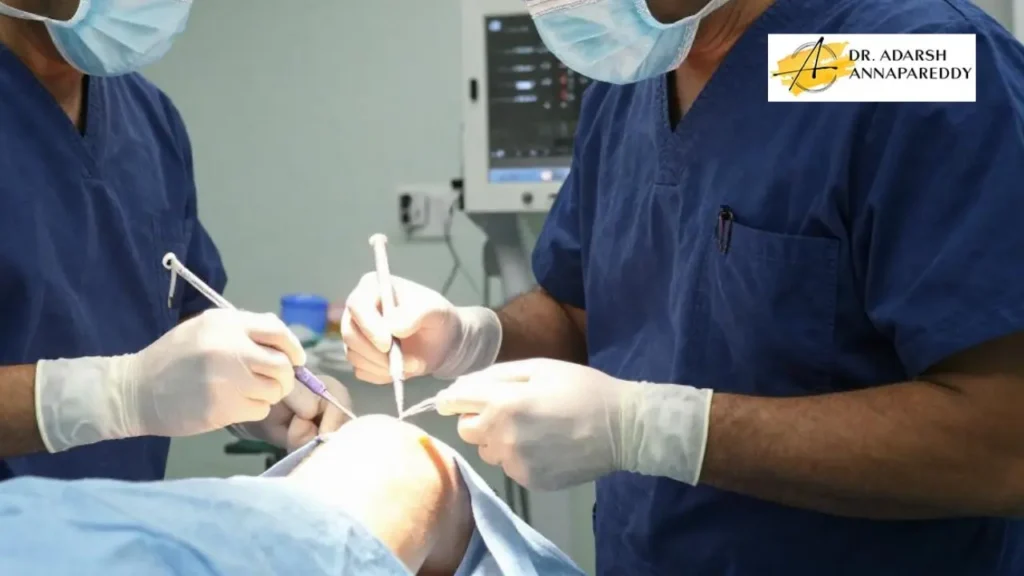
Knee replacement surgery is an elective procedure where the worn out parts of the knee joint are shaved off and then new prosthetic implants are placed into the joint space, so that free movement is possible after recovery. Normally, prosthetic implants last for about 15-20 years or even longer, if proper care is taken with regular exercise.
While this scenario may be well-suited to older patients, it presents a different set of considerations for younger, more active individuals. Those undergoing knee replacement in their 30s or 40s often face a higher likelihood of requiring revision surgery within a few years, owing to increased functional demands and implant wear over time. In this context, the role of experienced orthopaedic surgeons such as Dr Adarsh becomes particularly significant, not as a matter of preference, but as a factor that can influence long-term outcomes and the preservation of joint function.
When Does Revision Knee Replacement Surgery Become Necessary?
This procedure may be required due to increased wear and tear and a higher possibility of injury caused by greater movement in younger patients. In some cases, revision surgery may become necessary even earlier. Let us look at these instances in detail below.
Infections are the leading cause of implant rejection. The metal or plastic components of the implant can act as surfaces for pathogens, mostly bacteria to attach to and form a biofilm. Since the implant is located deep within the joint socket, antibiotic penetration is limited or almost negligible, making it difficult for the infection to resolve. This can lead to swelling, pus formation and severe pain, ultimately affecting joint function. It is important to note that the risk of such infections is currently less than 1%, thanks to significant advancements in surgical techniques and antibiotic protocols, which often begin an hour before the procedure.
Failure of implant components can occur due to wear and loosening of the implant, often associated with higher activity levels, increased body weight or wear of the polyethylene parts of the joint. Fixation may be done with or without cement.
As the joint surfaces rub against each other, they wear down and release particles. The body reacts to these foreign particles, leading to a gradual breakdown process. Over time, this can affect the surrounding healthy bone, causing the implant to become unstable or loose.
Implant instability occurs when the implant is no longer well-supported by the surrounding soft tissues, which can compromise its function.
Fractures around the knee implant can affect its structural integrity and may require revision knee replacement surgery.
Stiffness may develop if the range of motion does not improve after surgery and recovery, often due to scar tissue formation. In such cases, the doctor may recommend revision surgery.
What Happens in a Revision Knee Replacement Surgery?
If an infection is the cause then the surgeon may try to flush the implant with antibiotic solutions or even remove the implant components completely and then put in new implants. Both will require incision and surgery. This is a complete revision surgery where first the infected parts are removed, then antibiotic solution is used to flush all bacteria out and finally new implant components are added in. However, this two step procedure will take a few weeks as a special antibiotic containing cement is added after removal of joint components. After some days, the cement spacer is removed and new joint components are placed.
How is Revision Knee Replacement Surgery Different From The First Surgery?
Detailed imaging is first carried out to understand the extent of damage and loss of bone. The affected prosthesis is carefully removed, and bone grafts may be added if there is significant bone loss. Wires, screws, etc., may also be used to ensure the bones are strong enough to support the new implant. It is technically much more demanding and hence needs to be done by a highly experienced joint replacement surgeon. The procedure also takes at least 2–3 hours to complete.
So, if you are in a lot of pain and are not able to move around after a knee replacement, walk into our clinic for a consultation, today!
Frequently Asked Questions
Revision knee replacement is needed when the original implant fails due to wear and tear, loosening, infection, poor alignment or instability. In some cases, pain or loss of function persists despite the initial surgery, making revision necessary to restore mobility and comfort.
Common symptoms include persistent or increasing knee pain, swelling, stiffness, instability, difficulty walking, reduced range of motion and in some cases, redness or warmth around the joint indicating infection.
Revision surgery is more complex than the initial knee replacement. It often involves removing the old implant, managing bone loss and placing a new, more specialized implant. The procedure usually takes longer and requires greater surgical expertise.
Risks include infection, blood clots, stiffness, implant loosening, nerve injury and slower healing. However, with experienced surgeons and proper post-operative care, most patients achieve significant pain relief and improved function.
Maintaining a healthy weight, following physiotherapy guidelines, avoiding high-impact activities, managing infections early and attending regular follow-ups can help prolong implant life and reduce the risk of revision surgery.