
Arthritis is a chronic degenerative condition where the cartilage in your joints gets severely inflamed and can affect the way you move and go about your daily routine. The knees are crucial joints which get affected the most- as they are designed to bear your weight in full and also help you move from one place to another in a stable way. Osteoarthritis of the knee can affect the joint severely enough to necessitate the requirement for specific treatments. They range from non-surgical to surgical knee replacement.
Stages of Arthritis and How They Are Treated-
Cartilage present at the knee joint breaks down in stages, over many months or years and this can cause the bones at the knee to rub against each other in a painful way. Since there is no cure for osteoarthritis, it becomes important to understand which stage of severity the condition is at and how it can be treated in the right way. The main aim of treatment is to ensure that symptoms don’t get too severe and the disease progresses at a more manageable rate. But, if you don’t seek help or your symptoms continue to worsen over time, then surgery may be required as the last resort.
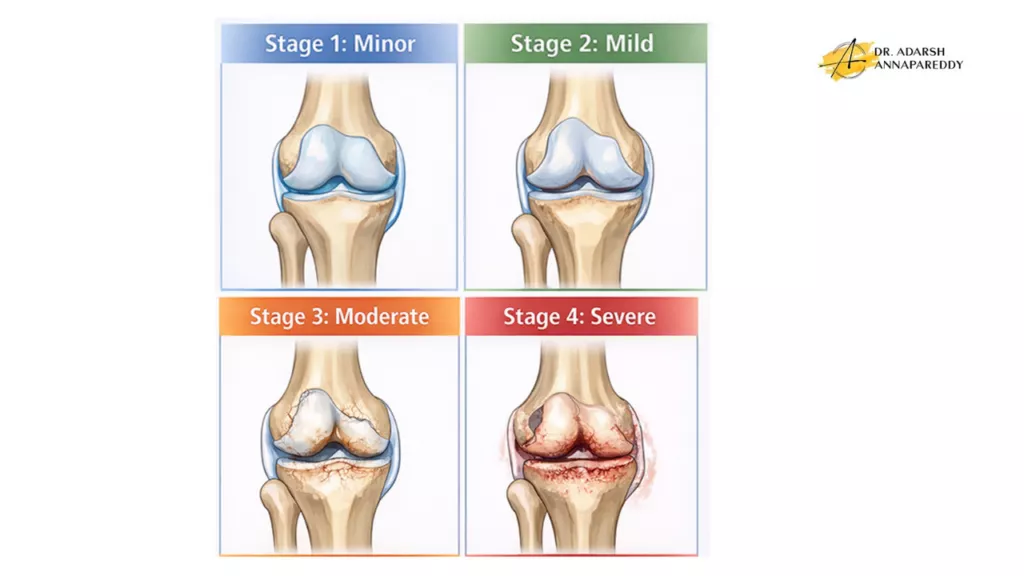
Clinically, the stages of arthritis are divided based on severity of symptoms-
- Stage 1- Minor– There is some wear and tear of the cartilage but there is no pain.
- Stage 2- Mild- You will probably feel some pain and stiffness but the bones are still not grinding against each other, as cartilage is still present to cushion them.
- Stage 3- Moderate– If you try to run, walk, squat or kneel, you may have severe pain and stiffness. Inactivity can also aggravate symptoms.
- Stage 4- Severe– When there is almost no cartilage present, the bones grind against each other and cause you a lot of pain and stiffness.
The best treatment options for knee osteoarthritis include-
- Treatment for Stage 1 begins with conventional methods like taking painkillers, doing specific exercises to strengthen muscles and bones at the joint, weight loss and even supplements like glucosamine may be recommended.
- Stage 2 treatment involves the use of pain killers, heat or ice therapy, knee brace and weight loss as a strategic move to reduce strain on the joint.
- Stage 3 osteoarthritis treatment involves the use of potent painkillers, heat and ice therapy, corticosteroid or hyaluronic injections at the joint space, exercise and the use of assistive devices.
- The last and most severe stage of osteoarthritis does NOT respond any more to conventional treatments and hence knee replacement surgery is recommended. If you are looking for the top knee replacement surgeon in Hyderabad, then you have come to the right place.
Knee replacement can be done in the traditional way, though robotic knee replacement surgery is gaining more traction these days, as it promises unparalleled precision and shorter recovery times. The procedure costs more and it requires highly skilled specialists to perform the procedure, but we think the payoff is better- smaller incisions, lesser scarring, minimal bleeding and shorter hospital stays.
Conclusion
Osteoarthritis can be hard to deal with as it is a chronic condition and can cause pain and stiffness, even when you are just doing regular chores or jobs. This can affect your mood and quality of life significantly. Apart from medications and surgery, making sustainable changes to your lifestyle before, during and after treatment will ensure that you continue to live life on your own terms and don’t succumb to intense pain or related symptoms and feel left out. So, if you want to get your knee checked and need sensible advice, walk in to Dr. Adarsh’s Orthopedic Clinic today!
Frequently Asked Questions
Knee arthritis progresses through four stages: early, mild, moderate, and severe. Each stage reflects increasing cartilage damage, joint space narrowing, bone changes, and pain levels visible through imaging and physical symptoms.
Early-stage knee arthritis may cause joint stiffness after rest, mild swelling, clicking sounds during movement, and occasional pain after activity. Cartilage damage is minimal, and daily activities remain manageable.
Treatment includes weight management, strengthening exercises, physical therapy, knee braces, oral anti-inflammatory medications, and corticosteroid or hyaluronic acid injections to reduce pain and improve joint movement.
Severe knee arthritis is treated with advanced pain management, limited-impact activity modification, assistive devices, and surgical options such as partial or total knee replacement when joint damage restricts movement and function.
Progression can be slowed through regular low-impact exercise, muscle strengthening, maintaining a healthy weight, joint protection strategies, and following a structured treatment plan recommended by an orthopedic specialist.