
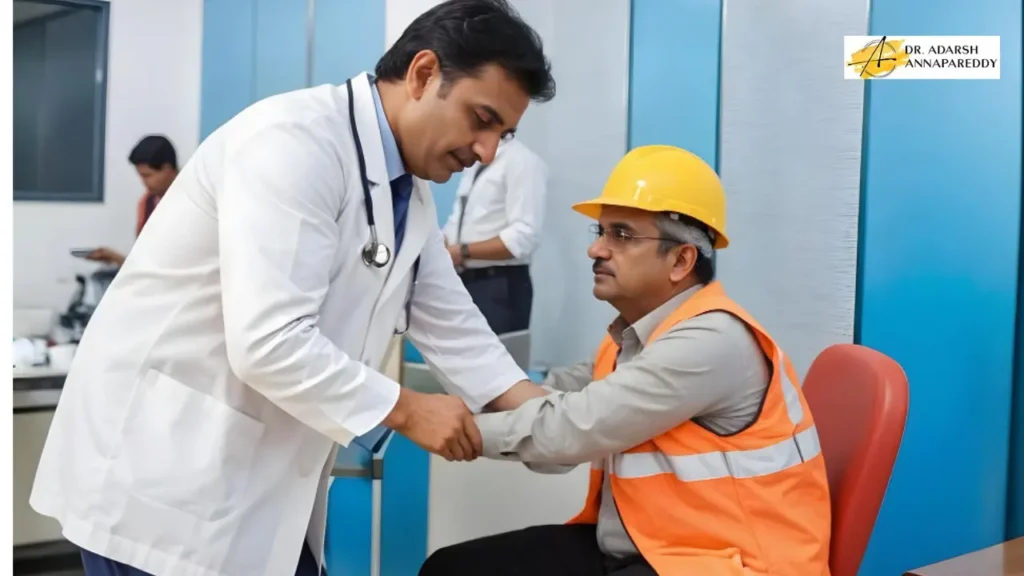
Workplace injuries affect millions of individuals worldwide, including in India. Though such injuries are normally assumed to occur in professions that involve a fair amount of physical labour, it can just as much affect a blue collar worker working on a desktop or computer anywhere. Common orthopedic workplace injuries include ones that occur due to repetitive motions of different kinds, falls, slips or overexertion in general. You need to consult a specialist for workplace injuries treatment without any delay and you can do so at Dr. Adarsh’s Orthopedic Clinic.
Common Orthopedic Workplace Injuries
These are some of the most common workplace injuries-
- Overexertion:
When a person pulls, pushes, lifts, or does any highly demanding move in an already physical job, it can cause the joints or muscles to get affected quickly. These movements are commonly observed in people who work in construction, driving, warehouses etc. Common injuries include muscle strains, back injuries, connective tissue injuries that affect joint function etc.
- Repetitive Action Injuries:
As the name suggests, these injuries are caused due to repetitive movements which can wear down joints and cause nerve compression and chronic inflammation, leading to severe pain and stiffness. These are the most common injuries in office workers- as sitting on a desk, typing away and using a mouse for hours on end, while sitting hunched can affect how joints work. Back injuries are extremely common- as mostly all of us have very bad posture, when we sit for work. - Reaction Injuries:
These are not very common but can greatly impact your routine. Reaction injuries occur when you fall or slip and your body reacts in a particular way, to keep the head from hitting on a hard surface. When you try to break the fall, you can either end up with a broken or cracked bone, a bad sprain, muscle strain, or even connective tissue tear. Symptoms may not always be apparent either, as you may feel a little sore and then feel better quickly.
Preventing Workplace Injuries
Working to ensure that such injuries don’t affect employers and employees is important- as valuable resources and man hours get lost due to injury. Employers should hence make sure that workplace safety concerns are duly addressed without any delay and that all employees receive training on safety policies and practices. Offices need to have anti-slip flooring as a basic measure and work towards better ergonomic practices in the long term.
Employees on the other hand need to understand how workplace injuries can happen and work to prevent them. They should not be allowed to overexert themselves, they need to understand enough about ergonomics to change their desk space and if the job involves manual labour- then the right technique to lift needs to be employed. Ensuring that the workplace is clean can also help in finishing work faster.
Workplace Injuries Treatment
Orthopedic care for work related injuries involves proper diagnosis of the condition affecting the individual and then treating it properly. Imaging is used to understand extent of damage and precise location. Treatment can be conventional for minor injuries or may need surgery for more extensive or severe ones.
Examples include the use of painkillers and physiotherapy, with requisite ergonomic changes being made for mild or moderate injuries.
For severe injuries that need specialised surgery, physical rehabilitation and occupational rehabilitation need to be considered afterwards. Ergonomic changes are definitely needed so that recovery can progress at the right pace for the affected individual. Consult the best orthopedic surgeon in Hyderabad, if you have any joint or musculoskeletal concern, as it may become a chronic condition that can cause a lot of pain in the long term.
Conclusion
Orthopedic workplace injuries are common and can affect both the person involved and the company they work for. This is why it is important to understand symptoms which warrant walking into an orthopedic clinic, as delay or late diagnosis can worsen outcomes. Risk factors need to be understood and measures should be taken to actively prevent them from affecting anyone at work. Dr. Adarsh’s Orthopedic Clinic ensures that you get diagnosed and treated the right way, so that you can get back to life and excel at work, like always.
Frequently Asked Questions
Common workplace injuries include sprains, fractures, back injuries, tendon strain, and joint dislocations. These injuries may occur due to lifting heavy objects, repetitive movements, slips and falls, or equipment-related accidents. Musculoskeletal injuries are among the most frequently reported workplace health issues and often require orthopaedic evaluation and treatment.
Medical evaluation is necessary when pain, swelling, or reduced movement occurs after an injury. Difficulty bearing weight, persistent discomfort, numbness, or visible joint deformity also requires attention. Early diagnosis helps prevent complications and allows orthopaedic specialists to recommend appropriate treatment and rehabilitation.
Orthopaedic specialists diagnose injuries through physical examination and imaging tests. X-rays identify fractures and bone alignment problems. MRI scans help detect ligament, tendon, and muscle damage. CT scans may be used for complex bone injuries. Accurate diagnosis allows doctors to determine the severity of the injury and plan treatment.
Treatment depends on the type and severity of the injury. Options include rest, anti-inflammatory medication, physical therapy, and supportive braces. More serious injuries may require minimally invasive procedures or surgery to repair damaged tissues. Rehabilitation programs help restore strength, mobility, and function after treatment.
Preventing workplace injuries involves proper lifting techniques, ergonomic workstations, and use of protective equipment. Regular breaks during repetitive tasks reduce strain on muscles and joints. Training programs that teach safe work practices help employees recognize risks and maintain a safe working environment.