
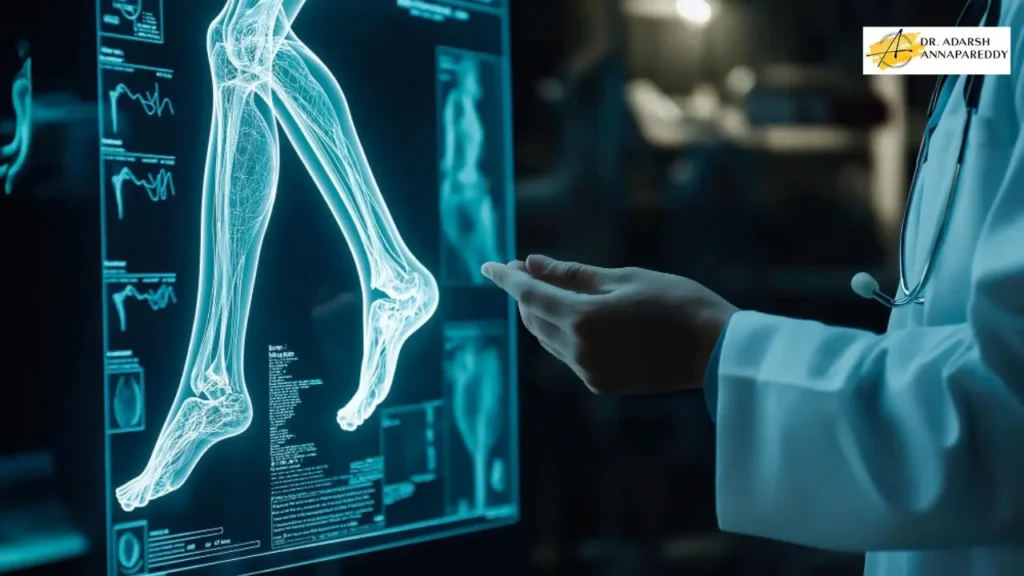
Imaging can be considered a major backbone in the process of diagnosing a condition and then using that relevant information for coming up with a highly relevant treatment plan. When you show symptoms like extreme pain that refuses to go away, severe stiffness, poor joint mobility and function and it does not get better, you should consult the best orthopedic doctor in kondapur- so that you can understand the root cause of the pain and discomfort and begin to treat it promptly. Some imaging techniques that are routinely used include MRI, CT scan, fluoroscopy, digital X-rays etc. among others.
Why Orthopedic Diagnostic Imaging is Important?
Advanced imaging in orthopedics has come a long way from before and can accurately help diagnose conditions that can never be understood just by touching, feeling or describing the sensations felt.
Imaging can hence help orthopedic doctors understand which bone, joint, ligament, tendon, muscle or soft tissue is affected and also check for the extent of damage present. This is because detailed imaging can help doctors visualise structural details better and chart an appropriate course of treatment, going forward.
Types of Orthopedic Diagnostic Imaging
The different methods of diagnostic imaging include:
- Digital X-ray– A digital X-ray in orthopaedic care is one of the most fundamental and highly essential techniques used on a routine basis. It is used to diagnose fractures, track arthritis and its effects on joints and tissue over time and verify bone and joint alignment. Calcium rich areas appear very brightly on the image, while less dense structures look darker. This is how doctors interpret scans – by looking for differences in structure and opacity. Digital sensors are used, instead of a film for the images.
- MRI Scan- An MRI for orthopedic diagnosis is another technique routinely used. It uses energy from a high strength magnet that rotates in a set up, so that images of cartilage, bones, soft tissue, tendons and ligaments can be taken in great detail. There are different kinds of MRI- functional, high resolution, 3D MRI or MRA respectively.
- CT Scan– A CT scan for bone and joint injuries is when high resolution x-rays are used to create detailed cross sectional images of the body. They can help diagnose complex fractures and other joint injuries and to check for joint alignment.
- Fluoroscopy- A continuous beam of x-ray is used to take images of bones or joints in real time- this is used during surgery, as it is very convenient to check for changes.
- Ultrasound– High frequency sound waves are directed at the area of interest with an ultrasound wand. This can be used to image effusions and fluid filled areas with great precision- like in muscle injuries or for tendons.
- PET scans – These are not commonly used but are useful in diagnosing bone tumours or necrosis of bone tissue.
Imaging techniques are mostly non-invasive and not much preparation is required. All metallic items need to be removed and the person has to stay really still- that’s all is required.
For severe injuries that need specialised surgery, physical rehabilitation and occupational rehabilitation need to be considered afterwards. Ergonomic changes are definitely needed so that recovery can progress at the right pace for the affected individual. Consult the best orthopedic surgeon in Hyderabad, if you have any joint or musculoskeletal concern, as it may become a chronic condition that can cause a lot of pain in the long term.
Conclusion
Advanced imaging in orthopedics plays a crucial role in diagnosing conditions and charting treatment plans for the future. High resolution can help image soft tissues and complex injuries with greater accuracy and in turn help doctors deliver effective and requisite treatment. This improves patient outcomes in the long run.
So, if you have severe pain, stiffness after a fall or have a condition due to ageing, talk to Dr. Adarsh today- especially if you have been searching for ‘best orthopedic doctor in Secunderabad’ or ‘best orthopedic doctor in Kondapur’ online. Walk into Dr. Adarsh’s Clinic today, without further delay!
Frequently Asked Questions
Advanced imaging refers to medical technologies that create detailed images of bones, joints, and soft tissues. Techniques such as MRI, CT scans, ultrasound, and digital X-rays help doctors visualize internal structures. These imaging methods allow orthopaedic specialists to detect injuries, evaluate joint conditions, and plan treatments with greater accuracy.
Advanced imaging provides detailed views of bones, ligaments, tendons, cartilage, and muscles. MRI scans reveal soft tissue injuries such as ligament tears or tendon damage. CT scans show complex bone fractures and joint structures. These images help doctors identify the exact location and severity of an injury before starting treatment.
Orthopaedic care uses several imaging methods depending on the condition being evaluated. X-rays detect fractures and bone alignment issues. MRI scans examine soft tissues such as ligaments and cartilage. CT scans create detailed cross-sectional images of bones and joints. Ultrasound helps evaluate muscle and tendon injuries in real time.
Advanced imaging helps doctors understand the structure and extent of an injury before recommending treatment. Detailed images guide decisions about medication, physical therapy, or surgery. Imaging also assists surgeons in planning procedures by showing the exact location of damaged tissues and helping reduce surgical risks.
Most imaging procedures used in orthopaedics are considered safe when performed under medical supervision. MRI and ultrasound do not use ionizing radiation. X-rays and CT scans involve controlled levels of radiation that are carefully monitored. Doctors recommend imaging tests only when they provide important diagnostic information for patient care.