
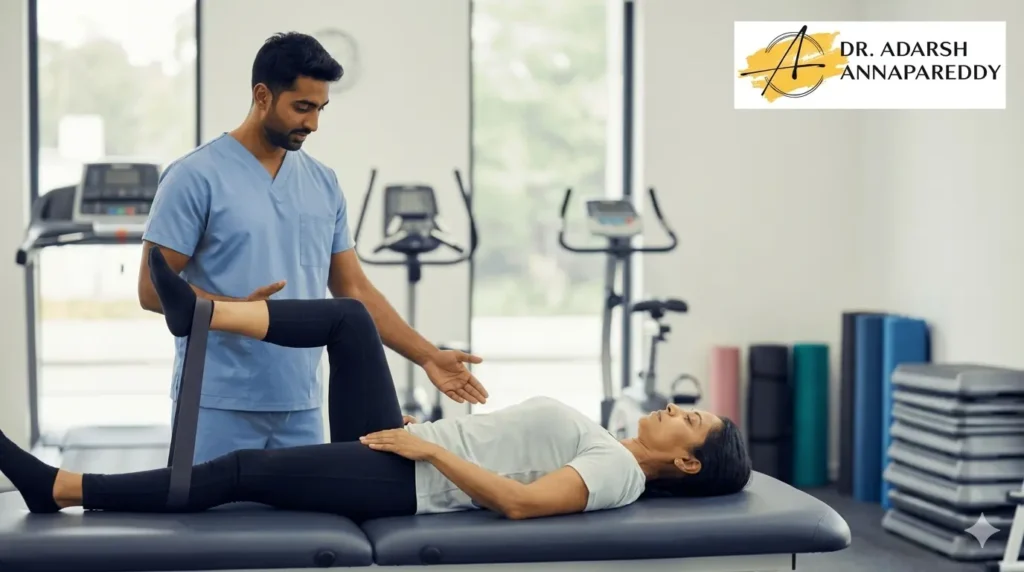
Physical therapy and joint replacement are not rivals. Instead, they are often steps on the same journey. Over time, your joints rust and creak, but regular oiling and careful usage can keep them swinging freely. Physical therapy, in this metaphor, is the oil and maintenance – a way to keep your body’s hinges moving smoothly, without reaching for new parts just yet.
Physical therapy addresses the root of the discomfort. It doesn’t aim to mask your symptoms. It gently but effectively strengthens the muscles around the affected joint, redistributes load, improves posture, corrects gait and reduces inflammation. It’s not magic – it’s movement, science and consistency coming together. In cases of early arthritis or moderate degeneration, consistent therapy can delay surgical intervention by several years. For younger individuals, this means postponing the need for a future revision surgery, which is often required in artificial joints after 15–20 years of use.
Physical Therapy For Knee Arthritis-
Physical therapy for knee arthritis acts like a tailored antidote – one that is personal to your pain, your limitations and your goals. It doesn’t involve generalised advice.
Whether you’re seeing an Orthopaedic doctor in Gachibowli or a Sports Medicine Specialist in Hyderabad, they’ll often prescribe targeted physiotherapy before considering surgical alternatives. Some options that you will be advised to try include-
- Exercises that focus on quads, hamstrings, glutes and improving core strength- the support system for the knee joint are good for you. When these muscle groups are fortified, the knee is less burdened. Pain diminishes, and movement becomes more fluid.
- Isometric exercises where the joint remains still while the muscle works are perfect for those with severe stiffness. As strength builds, dynamic exercises, balance training and gentle resistance work are layered in.
- Aquatic therapy, or pool-based rehab, is another feather in physiotherapy’s cap. The water’s buoyancy supports your weight, easing joint strain and allowing more comfortable movements. Many Indian physiotherapy centres are now integrating hydrotherapy into arthritis management with fantastic outcomes.
- Then comes the role of manual therapy. Hands-on techniques like soft tissue mobilisation and joint manipulation restore flexibility and reduce stiffness. Conservative therapy is often advised before considering surgery. Even those with moderate arthritis may find substantial relief, sometimes enough to delay a joint replacement by years.
Early Arthritis Treatment Options-
In the garden of ageing, arthritis is that stubborn weed that creeps in when you’re not looking. But the earlier you spot it, the easier it is to uproot. Early arthritis treatment options are a bouquet of therapies, some conventional, others complementary, but all geared towards halting the progression of joint wear and tear.
At the heart of these is, of course, exercise to avoid joint replacement. But this exercise isn’t about weight loss or cardio endurance. It’s a curated symphony of mobility drills, posture corrections and strengthening protocols. Indian patients often come with the misconception that pain equals rest. On the contrary, the right movement is medicine. A structured programme designed by a trained physiotherapist can reverse mild joint damage, especially in weight-bearing joints like knees and hips.
In addition to physical therapy benefits for arthritis, modern early treatment options include:
- Electrotherapy: Devices like TENS units help reduce pain through low-voltage electrical stimulation.
- Gait Analysis: For those visiting a Sports Medicine Doctor in Hyderabad, this high-tech assessment identifies biomechanical imbalances that can be corrected to protect joints.
- Dietary changes are another cornerstone. Omega-3 fatty acids, turmeric, ginger and a balanced diet can help reduce systemic inflammation, slowing arthritis from within.
Conclusion-
Joint pain can feel like walking on glass – sharp, unpredictable and exhausting. But surgery doesn’t have to be the next step. With commitment, education and the right support system, it’s possible to walk a different road. One paved with better movement and not metal. Patients who consistently follow therapy regimens often experience improved mobility, reduced pain and a rekindled confidence in their own movement. Whether you would like to consult an orthopaedic doctor in Secunderabad or the Best ACL Surgeon in Hyderabad, you’re likely to hear the same thing: movement is medicine. Especially when guided by professionals. So, walk into our clinic for a consultation with Dr. Adarsh for any joint related worries that you may be dealing with. Book an appointment today!
Frequently Asked Questions
Yes, when started early, physical therapy and joint replacement planning can help maintain mobility, reduce pain, and strengthen muscles around the joint. This can significantly delay the need for surgery in many patients.
Absolutely. Physical therapy for knee arthritis helps improve range of motion, reduce stiffness, and build joint-supporting muscles, making everyday movement more manageable and less painful.
Non-surgical treatment for joint pain improves flexibility, reduces inflammation, and promotes long-term joint health. It also carries fewer risks compared to surgery and often enhances the quality of life
Yes. Exercise to avoid joint replacement includes low-impact routines like walking, cycling, water aerobics, and resistance training that support joint function and reduce wear.
If pain persists despite therapy, daily activities become impossible, or joint damage worsens, your doctor may recommend surgery. Until then, alternatives to joint replacement should be thoroughly explored.