
Introduction–
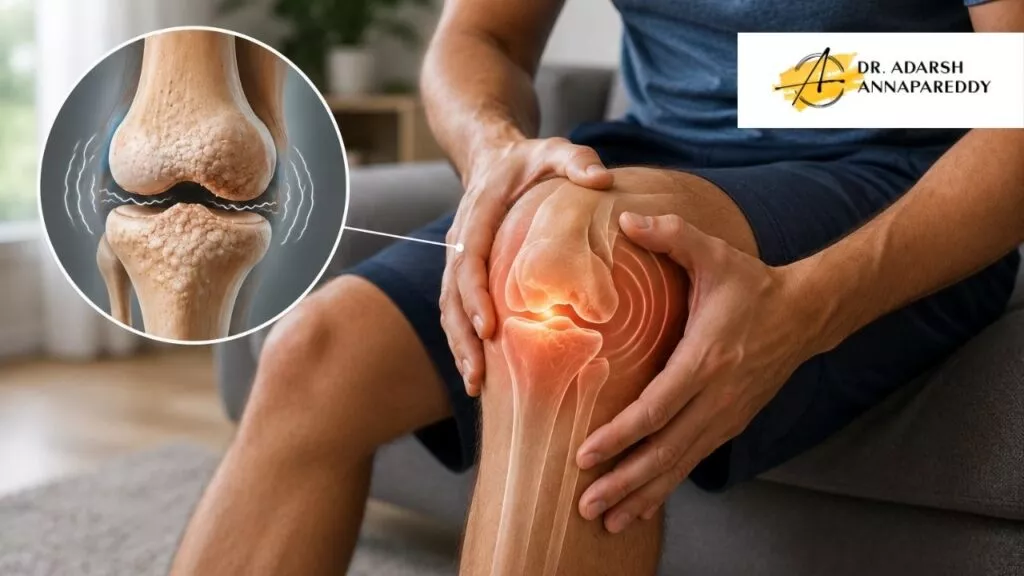
Grinding or popping sounds occur occasionally from different joints in your body- and it is completely normal, if there is no accompanying pain or stiffness. But, if such noises – called crepitus occur when you have chronic pain, inflammation or other symptoms, then you should talk to a specialist about these bone rubbing in knee symptoms. The most common cause is osteoarthritis- which can occur in stages, with symptoms getting worse as time passes.
Causes for Crepitus or Grinding Noises-
These are the most common causes for a grinding noise in knee when walking-
- Gas bubbles- There is something called the synovial fluid which helps your joints move smoothly without friction. Continued movement can cause gas bubbles to form in the liquid- which burst with an audible pop.
- Movement of ligaments over bones – Ligaments and tendons have to move on top of your bones- which are not very smooth or planar structures-this means they will have to stretch over those bumps or depressions. The noise you hear is them snapping back into position, once you stop moving in that particular way. Gas bubbles and ligament movement can cause knee grinding sound without injury, so don’t worry too much if this happens.
- Osteoarthritis– If your cartilage or connective tissue breaks down or gets worn due to repetitive usage over many years, then there is no insulation present between bones. This can lead to severe bone on bone knee arthritis symptoms. Pain, stiffness, tenderness and very poor quality of life can be commonly observed when you have stage 4 arthritis. Joint instability and even a visible joint deformity may be noted in many cases. Constant pain even while resting is a major red flag that must NOT be ignored. You should immediately consider talking to the best doctor for knee arthritis in Hyderabad for this.
- Injuries – Ligament, tendon or meniscus tears, runner’s knee or issues with your kneecap can all cause crunching and grinding sounds. If you notice such noises after a fall or injury, then talking to a specialist is better than ignoring your symptoms and hoping for them to go away.
- Surgery– If you have gotten surgery done previously, like a knee replacement for bone on bone arthritis, then you will notice that your new joint sounds creakier or louder than before. It does not mean that the surgery did not work, as long as you have no pain or associated discomfort.
Best Treatment For Severe Knee Arthritis-
If arthritis related symptoms are very severe and you no longer respond to conservative methods of treatment, then you may need to consider getting partial or total knee replacement surgery.
- Partial knee replacement surgery– This approach removes only affected or worn down joint tissue, while native tissue is retained. This approach works if damage is localised to only one compartment of the knee joint.
- Total knee replacement surgery – The damaged bone is resurfaced, cartilage and all joint components are carefully removed and artificial prosthetic implants are used to help reduce pain and restore mobility and joint function in the long term.
Conclusion–
You will need physiotherapy as part of a rehabilitation regimen, after surgery. A balanced diet, getting enough sleep, staying on top of your medications and making sure you do the exercises well are all equally, if not more important. These days, many patients qualify for robotic knee replacement for stage arthritis – where a robotic arm is used by an experienced surgeon, to bring greater precision and accuracy into the operating room.
The use of such specialized instruments also means smaller incisions, quicker recovery due to less blood loss and surrounding tissue not being manipulated and shorter hospital stays overall.
So, call us at Dr. Adarsh’s Clinic to learn more!
Frequently Asked Questions
Why do I hear grinding sounds in my knee?
Grinding or grating sounds, called crepitus, occur when structures within the knee move against each other. Osteoarthritis is a common cause because cartilage becomes damaged and joint space narrows. Meniscus injuries, kneecap problems and other structural conditions also produce clicking or grinding. Pain, swelling or restricted movement requires orthopaedic evaluation.
When should I see an orthopedic doctor for knee grinding?
See an orthopaedic doctor when grinding occurs with knee pain, swelling, stiffness, locking, instability, reduced movement or difficulty bearing weight. Evaluation is also important after a knee injury followed by a popping or grinding sensation. Clinical examination and X-rays help identify arthritis, structural damage and other causes requiring treatment.
Can knee grinding occur without pain?
Yes. Knee grinding can occur without pain, particularly when there is no significant joint damage or inflammation. The sound alone does not establish arthritis. Persistent grinding accompanied by swelling, stiffness, weakness, locking or reduced movement requires assessment to determine whether cartilage damage, arthritis or another structural problem is responsible.
Can exercise help reduce knee grinding?
Exercise strengthens the muscles supporting the knee, improves joint function and helps control osteoarthritis symptoms. Low-impact activities such as cycling, swimming and walking reduce joint stress while maintaining movement. Strengthening exercises for the quadriceps and surrounding muscles are valuable. Exercise does not restore cartilage that has already been lost.
What causes bone-on-bone knee arthritis?
Bone-on-bone knee arthritis develops when the protective cartilage covering the joint surfaces becomes severely damaged and joint space is lost. Age-related degeneration, previous knee injuries, excess body weight, repetitive joint stress and genetic factors contribute to osteoarthritis. As cartilage disappears, the femur and tibia move against each other, causing pain, stiffness and grinding.